Looking down at a laptop
Working on a sofa or low table pushes your head forward. Lift the screen on a stand or books and use a separate keyboard if you can.

Hamilton, New Zealand
Simple moves you can do in about a minute while you work. Most need nothing more than a chair, a wall, or space to stand and walk. Results vary—this is general wellness information, not medical care.
How to fit breaks into your dayStaying in one position for hours tires your neck, shoulders, and lower back. That is less about sitting being wrong and more about not changing position enough. A short stretch or walk wakes up stiff areas, gets blood moving, and helps you reset before the next block of work.
Many people in New Zealand mix desk time with driving or site work. Pick two or three moments you already have—after your first coffee, before a video call, or when you close your laptop at lunch—and use them for a quick posture reset. Thirty to ninety seconds is enough. Done most days, it adds up without needing a long gym session.
Good posture does not mean sitting bolt upright all day. It means ears over shoulders, ribs over hips, and feet flat on the floor when you are seated. When you notice your chin jutting toward the screen or your lower back rounding for a long stretch, that is your cue to stand up, roll your shoulders, or take a short walk.
Sit tall, feet flat. Put your hands behind your head, elbows wide. Lean your upper back gently into the chair, then sit up straight again. Repeat 8–10 times, breathing normally. Many people use this to ease upper-back stiffness from screen time.
Let your arms hang. Pull your shoulder blades together, hold for two seconds, then relax. Do 10 reps. Good for people who type for long periods.
Stand with soft knees. Tip forward from your hips, hands on thighs, back flat. Stop when you feel the back of your legs stretch, then stand up slowly. Do 8 reps. Useful before lifting or gardening.
Pull your chin straight back (like a small double chin), eyes level. Hold 3 seconds, relax. Do 6 reps. Often used when a screen sits too low and the neck drifts forward.
Tip: If something hurts sharply, stop and ease off. These are general wellness ideas, not personal treatment plans.
A standing desk only helps if you actually change position. Try switching between sitting and standing every 30–45 minutes if you can. When you stand, share your weight on both feet and do not lock your knees. Even a two-minute walk to get water counts—it moves your spine and legs in a different way than sitting.
Light movement during the day may help some people feel less stiff and more alert. Individual experiences differ. Walk while you take a phone call without video, or chat with a colleague on the stairs instead of at a desk. When the weather is rough in New Zealand, a lap inside the office or a covered walkway still works.
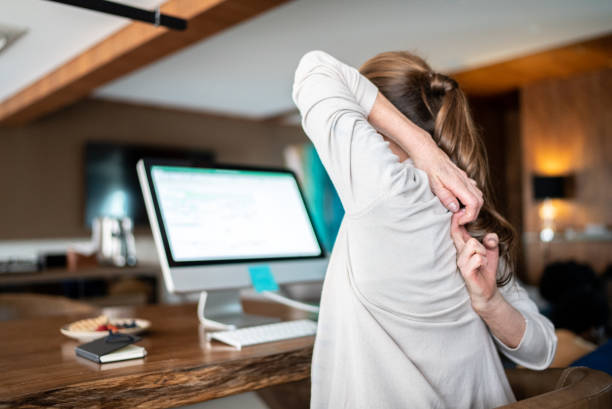
When you stand, imagine a straight line from your ear through your shoulder, hip, and ankle. When you sit, think ear over shoulder, ribs over hips, thighs level, knees bent about ninety degrees.
Your lower back should keep a slight natural curve—not pressed flat into the chair. A small rolled towel at your belt line can help on a deep, soft seat. Raise your screen so the top is near eye height so you are not always looking down. Keep keyboard and mouse close so your elbows stay by your sides.
Once an hour, take ten seconds to check in—not to sit rigidly perfect all day, which is tiring on its own.
Working on a sofa or low table pushes your head forward. Lift the screen on a stand or books and use a separate keyboard if you can.
Crossing now and then is fine. Doing it all morning can twist your hips one way. Switch legs or keep both feet on the floor.
Use speakerphone or headphones on long calls so you are not squeezing your neck to one side.
Slouching for months and years may contribute to tired muscles, tight shoulders, or headaches for some people—not usually from one bad day, but from repeat habits. Fixing small things early is sensible. Supports and gadgets on our posture devices page are optional extras; they do not replace movement, stretching, or professional advice when you need it.
These tips fit everyday workplace wellbeing in New Zealand. Your employer should provide a workable desk and a way to report discomfort. You can help yourself by taking breaks, speaking up about broken chairs or bad screen height, and getting proper advice if pain does not ease.
This is general information only. Follow your workplace policies and talk to a qualified health professional when you need personal advice.
Free or low-cost sessions in Hamilton and online for anyone who wants to practise short desk moves with others. Times are New Zealand (NZST)—check before you travel.
| Date | Event | Location |
|---|---|---|
| 12 June 2026 | Midday desk stretch walk-through (open office) | Hamilton CBD |
| 28 June 2026 | Standing break challenge — team check-ins | Online / NZ-wide |
| 15 July 2026 | Desk setup Q&A: chairs, screens, and short exercises | 36 Ward Street, Hamilton |
| 2 August 2026 | Weekend posture walk — gentle mobility stations | Hamilton Lake paths |
Ligamentscrubux.world is an information website based in Hamilton, New Zealand. We publish free, general content about desk habits, short posture exercises, and taking breaks during the workday. We are not a clinic, pharmacy, or equipment shop.
Questions? See Contact for our address, phone, and email. Read our Privacy Policy and Terms of Use.
This site may be promoted through online advertising (including Google Ads in New Zealand). We do not charge visitors to read our articles. We do not sell medical services, prescription products, or guaranteed posture outcomes. If we ever recommend third-party products, we will state clearly when a link is sponsored or if we may receive a commission, in line with the Fair Trading Act 1986. Prices, availability, and suitability of any product are the supplier’s responsibility—always check details before you buy.
Cookie and analytics tools used for advertising are optional and controlled through our cookie banner and footer link Manage cookie preferences, in accordance with the Privacy Act 2020.
Many people like a one-minute reset every 30–45 minutes of desk work, plus a longer walk at lunch. Adjust to what feels right for your job.
No for the basics—a chair, wall, or desk is enough. Optional cushions and stands are explained on our posture devices page.
Sitting or standing awkwardly for long periods may add up to stiffness and discomfort for some people. Changing habits and staying active may help; read more on our posture over time page.
No. We share general lifestyle information only. See the disclaimer below and talk to a qualified professional about your own situation.
No. We provide free educational content only. We do not sell supplements, medical devices, or personalised treatment plans.
Our editorial team prepares general wellbeing articles for New Zealand readers. Content is not a substitute for advice from your doctor, physiotherapist, or occupational health provider.